Jakub Hollmann for HN: Trust in Trust Funds Is Returning Among Entrepreneurs
31 \ 08 \ 2021
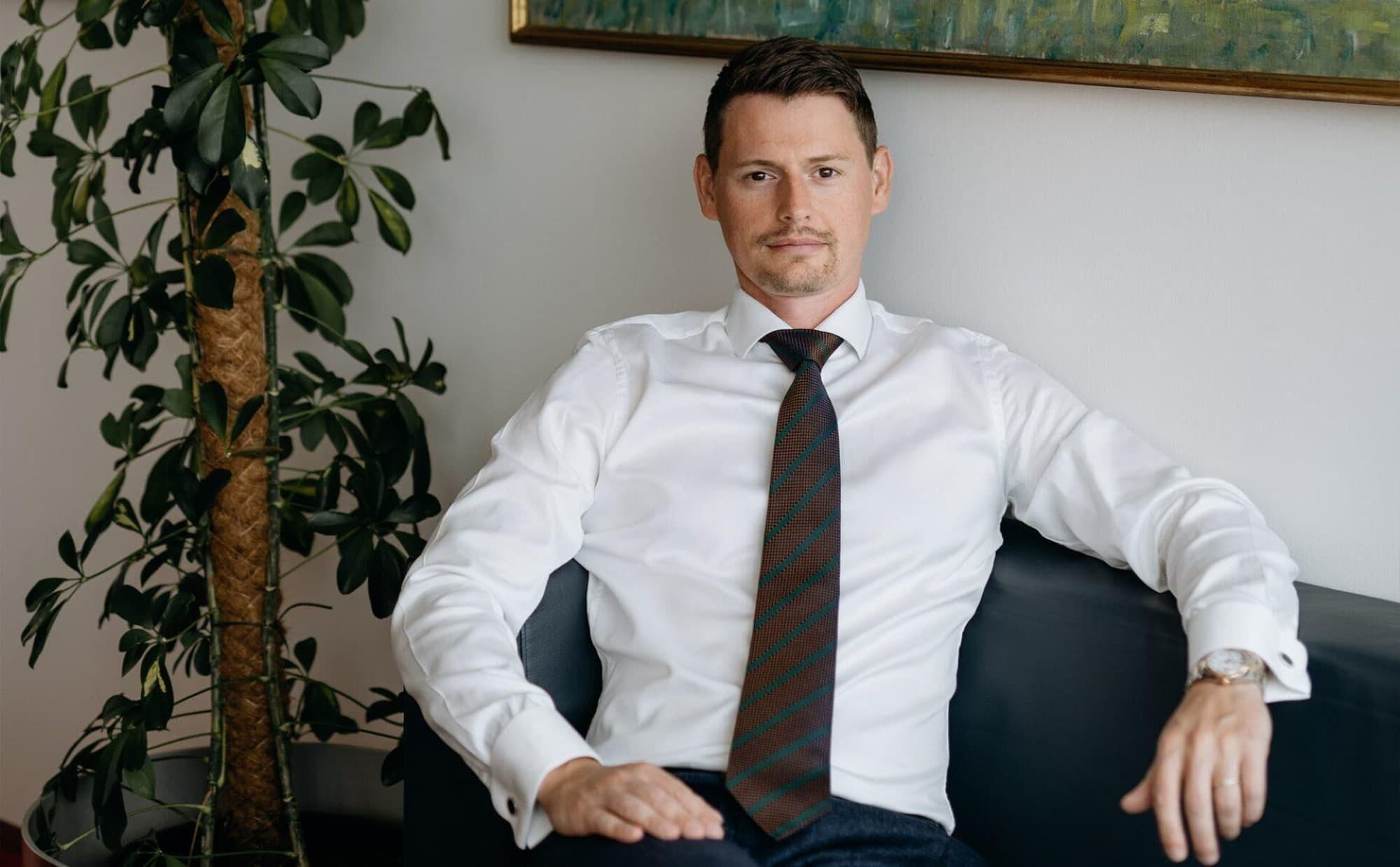
For decades, Czech society has been searching for a way to properly manage assets. It is only in the last 30 years that we have reached a stage where entrepreneurs are beginning to consider how to organize and secure their assets across generations. Trust funds are proving to be a very suitable tool for this, says attorney Jakub Hollmann, the new partner at the law firm Císař, Češka, Smutný, in an interview with Hospodářské noviny.
HN: Trust funds were “popularized” by Prime Minister Andrej Babiš. Still, they are not a completely new institution, although they were somewhat forgotten during the previous regime.
Trust funds or their equivalents have existed here since 1811, survived the First Republic era, and were only abolished by the socialist civil codes. This history explains the strong distrust of the Czech public toward this instrument after it was reintroduced by the new Civil Code. In the first two years, the funds were heavily criticized, including by former Minister of Justice Robert Pelikán. He only stopped criticizing them after becoming Minister of Justice himself. On the other hand, it must be acknowledged that he helped pass a tax amendment that enabled their functioning.
HN: Does that mean they were initially not used because of tax reasons?
It was the 2016 amendment that allowed trust funds to operate in the Czech legal environment. The original proposal in the Civil Code was incomplete from a tax perspective. Basically, you need the structure of a trust fund to behave like a holding company organization, not to have each asset transfer taxed separately, which was the case under the original regulation.
HN: What can trust funds be used for?
Primarily, they enable smooth intergenerational transfer of assets, their organization, and asset protection. In business, you are often targeted by attacks, whether from alleged creditors or fraudulent bill creditors. There are many types of economic attacks to consider. Asset protection through trust funds means you don’t want the assets to be exposed to business risks. Another advantage is that you set your own rules for inheritance purposes, and conflict of interest is also one of the reasons for establishing trust funds.
HN: Why is this type of asset management only becoming prominent now?
Due to expropriations and totalitarianism, private property practically didn’t exist here in the past. If there was any private ownership, it had to be traceable so that the then-communist party could take care of it. Then came the economic transformation in the 1990s and a rather wild privatization. More than ever, the motto was: easy come, easy go. Therefore, people didn’t bother much about how to organize their assets. Today, 30 years after the revolution, we are at a stage where entrepreneurs have actually built wealth, are starting to think about it, and looking for ways to organize it within the family and especially how to pass it on across generations.
HN: So the inheritance institution is weakening today, and people who have assets try to organize them while still alive?
Yes, because a will is a relatively easily challengeable instrument. If you divide your assets among several heirs by will and one of them is unhappy with their share, they can delay the settlement of the inheritance with various procedural obstructions, at least slowing it down. This forces the other heirs, who expect and need the assets, to agree to various compromises. By placing assets into trust funds, you not only set clear rules of operation from the start, but also there is no discussion about changing the rules set by the founder unless the founder explicitly stipulates so.
HN: Can heirs influence what happens to assets in the trust fund after the founder’s death?
Here, two traditional legal cultures clash: Anglo-Saxon and our continental system. While in the Anglo-Saxon system there is a landmark late 19th-century decision in the case of Saunders vs. Vautier, which allows beneficiaries, by unanimous decision, to change the founding statute, our system does not allow this. I believe it is right that this rule was not transferred into Czech law because the founder should have the right to decide about their assets themselves. They acquired it, multiplied it through their activities, and should have the sole right to decide how it is managed and distributed.
HN: It’s not just about inheritance; companies also face succession issues when management changes. Can trust funds help there?
This is a fairly common example in family business succession when the owner and founder still doesn’t trust that their offspring or heir can run the company. They place the company into a trust fund and appoint one or two other trustees alongside themselves. These are usually people involved in managing the company even now, and the statute defines precise conditions for the heirs under which they will become the sole trustee of the company, effectively taking control and running it. Or the company’s share in the trust fund may be dissolved, and the family business will continue to operate outside the fund. Thus, the fund can serve as a transitional station until the heir is educated, gains experience, or fulfills other conditions set by the original owner and founder.
HN: Speaking of risk diversification as one of the reasons for establishing a trust fund, what exactly does it protect me from?
Imagine you own, besides general life necessities, real estate, a car, some inheritance, and you run a business. If you run a business through a corporation, you are liable for obligations up to the amount of unpaid registered capital. If you run a sole proprietorship, you are liable with your entire property. If you commit a criminal offense within business involving a corporation, your personal assets become at risk, and liability limited to unpaid capital becomes just an illusion. There are many business risks, including alleged creditors or harassing insolvency petitions. We don’t need to go far back in history; those cases once shook the Czech business environment significantly. By placing assets into a trust fund, you legally separate those assets from yourself. The assets you are liable with afterward are only those registered in your name. Unless it is a sham transfer, there is no causal link with business risks, and you protect assets for your family in a fundamentally strong way.
HN: Let’s look at it practically. If I decide to establish a trust fund, what will I need and how much will it cost?
Trust funds are not established at the first, second, or third meeting with a client. It is an institution that requires trust between the client and the lawyer. Of course, there are many ad hoc companies on the market offering these services. However, there is a significant risk that such an approach will cause clients more problems than benefits. Typically, a lawyer and client negotiate for weeks or months, exploring the reasons for establishing the fund, the client’s family circumstances, perceived business risks, family issues encountered, and their vision for the future and the future of their assets. We need to understand the basic setup, the client’s innermost thoughts and motivations when deciding to establish a trust fund. We do not need to know the asset structure in complete detail. Sometimes clients do not even want to tell us about some assets—they wait to see how the structure will work and deposit assets they did not disclose earlier at a later time. This is also a fairly common situation. The fee for establishing a trust fund is highly variable because it depends on the complexity of the structure and the assets placed into the trust fund.
Author: Martin Drtina
JUDr. Jakub Hollmann, Ph.D.
Owner and Attorney