
Portos represented a group of 24 senators at the Constitutional Court. They sought to repeal the problematic amendment.
11 \ 02 \ 2026
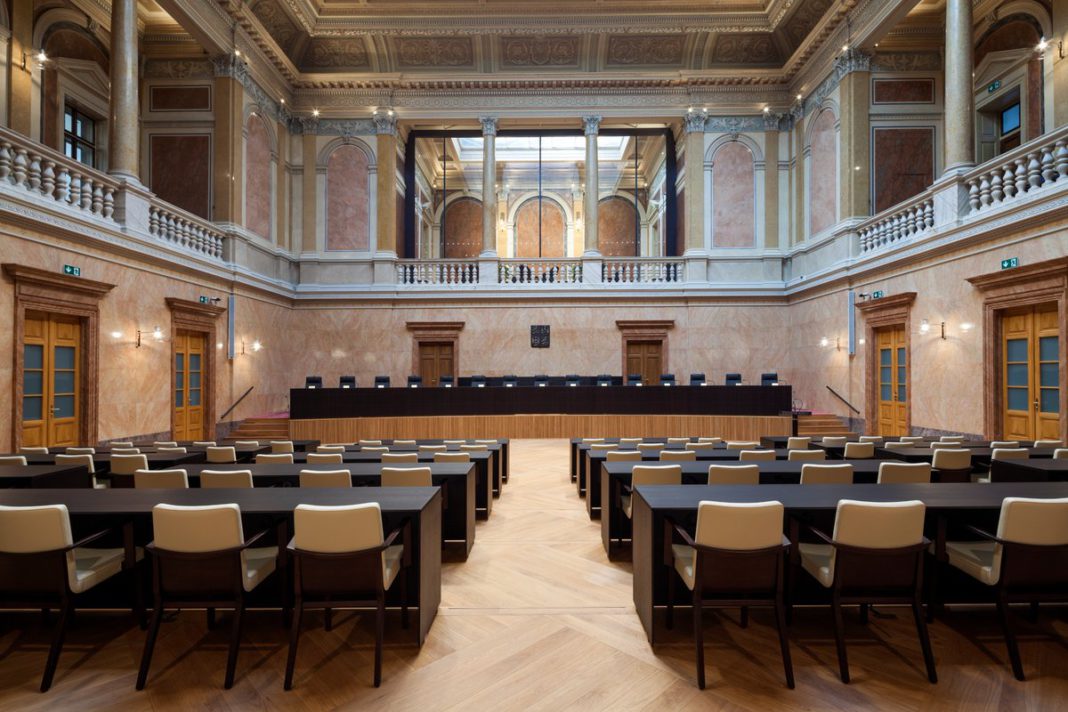
Brno | Prague – The Constitutional Court rejected a proposal by a group of senators to repeal part of the Lex Ukraine VII law. The senators submitted the proposal in the belief that the new criminal offense of "unauthorized activity for a foreign power" had been inserted into the law as an inadmissible legislative amendment, without proper debate and without broader professional and political consensus.
The group of 24 senators was represented by JUDr. Jaromír Císař, partner at the Portos law firm.
The proposal was initiated by Senator Michael Canov and joined by other senators across the political spectrum. According to the proposers, new criminal offenses cannot be introduced without proper discussion, expert debate, and a transparent legislative process, even in extraordinary security or international situations. The aim of the proposal was to defend the constitutional rules of the proper legislative process.
"Although the Constitutional Court did not grant the proposal, it considers it essential that the issue of legislative amendments and circumvention of legislative initiatives was opened before the highest constitutional authority and discussed in detail," said Canov.
Although the prohibition of amendments is not explicitly enshrined in law, the Constitutional Court's case law has so far condemned this practice as fundamentally unacceptable, as it conflicts with the requirements of transparency, clarity, and rationality of the legislative process arising from the principles of a democratic state governed by the rule of law, enshrined in Article 1 of the Constitution.
The amendment to the criminal law was not part of the original government bill, which aimed to extend temporary protection for people fleeing the war in Ukraine. The criminal law amendment was therefore not included in the explanatory memorandum and was not subject to the standard consultation procedure or broader expert debate. It only became part of the amendment on the basis of an amendment proposed during the second reading in the Chamber of Deputies.
Both the Supreme Court and the Supreme Public Prosecutor's Office expressly objected to the vague definition of "unauthorized activity for a foreign power." The proponent of the new criminal offense circumvented these objections by pushing through the amendment not through the proper legislative process, but through a so-called rider. To this end, the then Minister of the Interior, as the sponsor of the government bill, this time in his role as a member of parliament, submitted his own parliamentary amendment to the government bill.
According to Jaromír Císař, a partner at Portos, the Constitutional Court has repeatedly declared legislative amendments inadmissible in the past, but it seems that the Constitutional Court in its current composition takes a more tolerant approach to legislative amendments.
It is important that extraordinary legislative procedures do not become common practice. "Criminal law is such a sensitive area that it requires the utmost transparency, predictability, and expert discussion. In our opinion, these requirements were not met this time," added Jaromír Císař.


\ PORTOS, advokátní kancelář s.r.o. is one of the largest and oldest law firms in the Czech Republic. Comprehensive legal advice is provided by a team of more than 170 experts specializing in specific economic sectors of clients. Over 33 years of operation on the Czech legal market, it has earned a reputation as a professional and reliable law firm that is one of the major players in the field of law and business.


